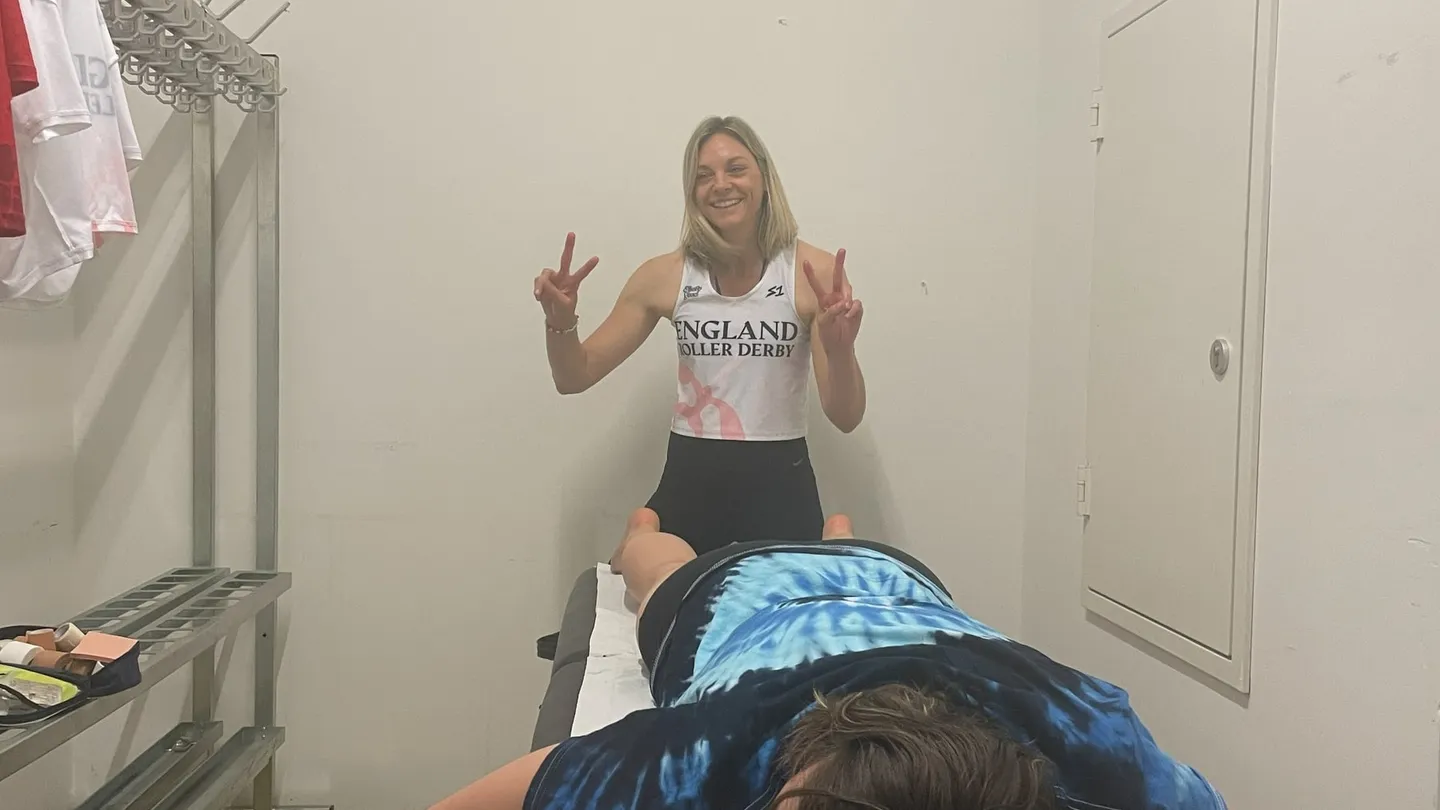
Assess
Physical screening and performance testing to find what is limiting you. Carly takes a full history, examines how you move and load, and measures where it matters, so the plan starts from numbers rather than guesswork.
Physiotherapy for hip and groin pain, from groin strains and tendon pain to early hip arthritis, with strength-led rehab that gets you running, changing direction and sitting comfortably again.

Overview
Hip and groin pain has several common sources. In sport, the adductor muscles on the inside of the thigh are often overloaded by kicking, skating, sprinting and sudden changes of direction. Pain on the outside of the hip, often worse lying on that side or climbing stairs, usually comes from the gluteal tendons.
Pain deep in the front of the hip or groin can come from the joint itself, including hip impingement in younger active people and osteoarthritis later in life. Exercise is a core treatment for hip osteoarthritis under NICE guidance. Pain can also be referred from the lower back.
Carly assesses where your pain is coming from, then treats it through physiotherapy and sports injury rehab. Performance testing measures hip and groin strength side to side, so you return to sport when the numbers say you are ready.
Adductor strength is rebuilt in stages, then speed and change-of-direction work is added back, so the groin can take match and training loads again.
Targeted strength work for the gluteal muscles, plus simple changes to how you sit, stand and sleep, eases the load on painful tendons on the outside of the hip.
An exercise programme matched to your ability builds strength and keeps the hip moving, which can ease pain and help you keep walking and doing what you enjoy.
Movement breaks, mobility and hip strength work help the hip and lower back cope with long periods seated at a desk, in a car or in a cockpit.
Why it happens
Overloading the adductor muscles with kicking, skating, sprinting or sudden changes of direction
A rapid increase in training load, especially running, jumping or lateral work
Weakness in the gluteal and hip muscles, which puts more strain on the tendons
Hip joint shape changes such as impingement, which can cause deep groin pain in active people
Osteoarthritis of the hip, which becomes more common with age
Long periods of sitting, or pain referred from the lower back

Your first session is a full hour with Carly. She takes your history, asks what you need to get back to, then screens how you move, how strong you are and what the problem area is doing under load.
You leave with a working diagnosis in plain English, the first steps of your plan, and a clear idea of how progress will be measured.

Sessions are £150 per hour, by appointment at UNTIL Marylebone, Canary Wharf or Soho. You can refer yourself; no GP letter is needed.
A clear path from first assessment to being back at full output, measured, not guessed. Every session is one hour with Carly, at UNTIL Marylebone, Canary Wharf or Soho.
Physical screening and performance testing to find what is limiting you. Carly takes a full history, examines how you move and load, and measures where it matters, so the plan starts from numbers rather than guesswork.

A programme built around your goals, your sport and your calendar. You leave knowing what is driving the problem, what you are going to do about it, and how progress will be measured from one session to the next.

Coached sessions and progressive loading, adjusted as you improve. Strength, control and conditioning are built in stages, with the load moved on only when the last stage has been earned.

Back to sport and racing, with objective measures to prove it. The decision to return rests on retesting against your own baseline, so you go back with evidence rather than a feeling.
Treatment approach
Assessment separates muscle, tendon, joint and back-related causes, then hands-on treatment and specific exercise ease pain and restore movement.
See treatment detail →Progressive adductor and hip strengthening, then running, skating and change-of-direction work, so the hip and groin can take the load your sport asks of them.
See treatment detail →Measures hip and groin strength between sides at baseline and before return to sport, so the decision rests on evidence.
See treatment detail →FAQ
In sport, groin pain most often comes from the adductor muscles on the inside of the thigh, which are loaded by kicking, skating, sprinting and quick changes of direction. A progressive adductor strengthening programme is usually the core of treatment, followed by a staged return to running and sport.
Go to A&E if hip pain follows a fall or accident, your leg has changed shape or looks badly bruised, or you cannot move your leg or put weight on it. Also seek urgent help if you have hip pain with a high temperature or feel very unwell.
Yes. Exercise is a core treatment for hip osteoarthritis in NICE guidance. Carly builds a strength and mobility programme around your ability and goals, so you can keep walking, working and staying active, and adjusts it as you progress from one session to the next.
Sometimes. Pain in the buttock, groin or thigh can be referred from the lower back, and the two often affect each other. Carly examines your back and hip together at your first assessment, so treatment is aimed at the true source rather than where the pain is felt.
Get Started
Box Box Physiotherapy and Performance • UNTIL Soho, 111 Charing Cross Road, London WC2H 0DT
Book an assessmentBased in central London, by appointment. Sessions at UNTIL Marylebone, Canary Wharf and Soho.